The PVKid.


Puerto Vallarta holds the No. 2 position
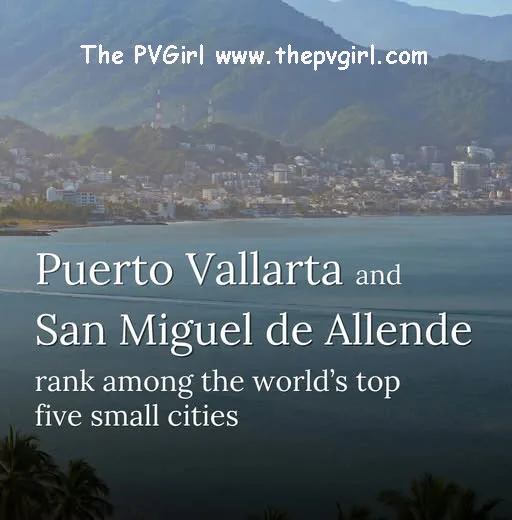
Puerto Vallarta and San Miguel de Allende have both earned places among the world’s five best small cities in Condé Nast Traveler’s annual Readers’ Choice Awards. In the poll reported by Mexico News Daily on October 8, 2026, readers placed Puerto Vallarta second and San Miguel de Allende fourth. Their results put two Mexican destinations in the company of cities including Victoria, Florence, Lucerne, Porto and Venice.
The recognition comes from a readers’ poll, not an official government or tourism designation. Nearly 800,000 Condé Nast Traveler readers took part in the magazine’s annual awards. The results offer a striking snapshot of the destinations that resonated with those voters—and of the different qualities that can make a small city memorable.
Two cities, two distinct appeals
Puerto Vallarta and San Miguel de Allende share a place in the top five, but the Mexico News Daily report presents them as very different destinations. Puerto Vallarta is a port and resort city on Jalisco’s Pacific coast. San Miguel de Allende is a historic colonial town in Guanajuato, recognized as a UNESCO World Heritage site.
That contrast gives the result its appeal: the two cities offer different kinds of setting and atmosphere, yet both found favor with international readers. The poll does not establish that one style of travel is better than another. Instead, their neighboring positions illustrate how varied the idea of a “best small city” can be.
San Miguel de Allende takes fourth place
San Miguel de Allende ranked fourth in the world, behind Victoria, Florence and Puerto Vallarta. The report says the city has appeared on the Readers’ Choice Awards list for seven consecutive years. It attributes its enduring appeal to a combination of colonial character, modern amenities and cultural offerings.
Condé Nast Traveler highlighted San Miguel’s Spanish Colonial architecture and colorful façades, as well as its art scene. One example mentioned in the magazine’s description is Fábrica La Aurora, a former textile factory now home to galleries and pop-up shops. The report also notes the Rosewood San Miguel de Allende hotel, which the magazine described as a “hidden oasis.”
Those details help explain the elements the magazine chose to emphasize: historic architecture alongside contemporary cultural spaces and places to stay. They also suggest why San Miguel’s appeal may reach beyond a single sightseeing landmark. The recognition reflects readers’ overall view of the city, while the magazine’s description offers a few specific examples of what it finds distinctive.
Puerto Vallarta holds the No. 2 position
Puerto Vallarta ranked second for the second consecutive year. Only Victoria, Canada, finished ahead of it; according to the report, Victoria has held the No. 1 position for four years in a row.
The magazine’s account pushes back against a narrow image of Puerto Vallarta as a destination defined only by cruise ships, crowded beaches and spring-break nightlife. It points readers instead toward the Old Town, with its winding cobblestone streets and bougainvillea, and mentions lesser-known places such as Ocean Grill, an open-air restaurant in a rocky cove, and Yelapa, a secluded beach accessible only by boat.
This framing broadens the picture without suggesting that the city’s familiar resort identity has disappeared. Rather, the report calls attention to other experiences within the destination: historic streets, a restaurant in a coastal setting and a beach reached by boat. For readers considering Puerto Vallarta, the article’s examples offer a reminder that a city’s reputation may capture only part of what visitors can explore. Please make sure to check out The PVgirl for your stay in Puerto Vallarta.
A second honor for Puerto Vallarta—and recognition for other Mexican beaches
Puerto Vallarta also placed on Condé Nast Traveler’s Best Beaches list for the Americas, taking No. 15. That gives the city recognition in two different categories: small cities and beaches.
It was not the only Mexican destination to appear among the beach selections. The report names Tulum as the Americas’ second-best beach, behind Hanauma Bay in Hawaii, with Playa del Carmen at No. 11 and Playa de Akumal at No. 13. Playa Balandra in Baja California ranked fifth, while Playa del Amor in the Marieta Islands placed sixteenth. Altogether, six Mexican destinations made the list described in the article.
These beach results are separate from the small-city rankings, but they add context to Mexico’s broader showing in the awards. Puerto Vallarta’s No. 15 beach placement should not be confused with its No. 2 city ranking, nor should the beach list be taken as a ranking of every Mexican beach. The article reports particular results within Condé Nast Traveler’s regional category.
What the rankings do—and don’t—say
A readers’ poll is a measure of the preferences of the people who participated, not a universal verdict on the world’s best destinations. The article identifies the poll as Condé Nast Traveler’s annual Readers’ Choice Awards and reports nearly 800,000 participants, but it does not provide a detailed account of the ranking methodology.
That distinction matters. The results support saying that readers voted Puerto Vallarta and San Miguel de Allende into the world’s top five small cities in this poll. They do not, on the information in the article, establish that either city has received an official designation from a public authority or that every traveler would rank them the same way.
Still, the placements are notable. Puerto Vallarta finished second for a second year running, while San Miguel de Allende extended its consecutive run on the list to seven years. Together, the results bring international attention to two Mexican cities whose appeal is described in sharply different terms: one Pacific-coast destination with an Old Town and beaches, the other a highland city known for colonial architecture and cultural offerings.
A shared place in the spotlight
Puerto Vallarta and San Miguel de Allende do not need to be presented as versions of the same experience to share the distinction. Their rankings show that Condé Nast Traveler readers valued both, while the magazine’s descriptions point to different reasons each may draw visitors.
For anyone choosing between them, the poll offers a conversation starter rather than a final answer: a coastal city or a historic highland town? Either way, the clearer takeaway is that Mexico has two destinations in the top five of this year’s readers’ ranking—and Puerto Vallarta earned a place on the Americas’ beach list as well.
For rentals in Puerto Vallarta
About the Author