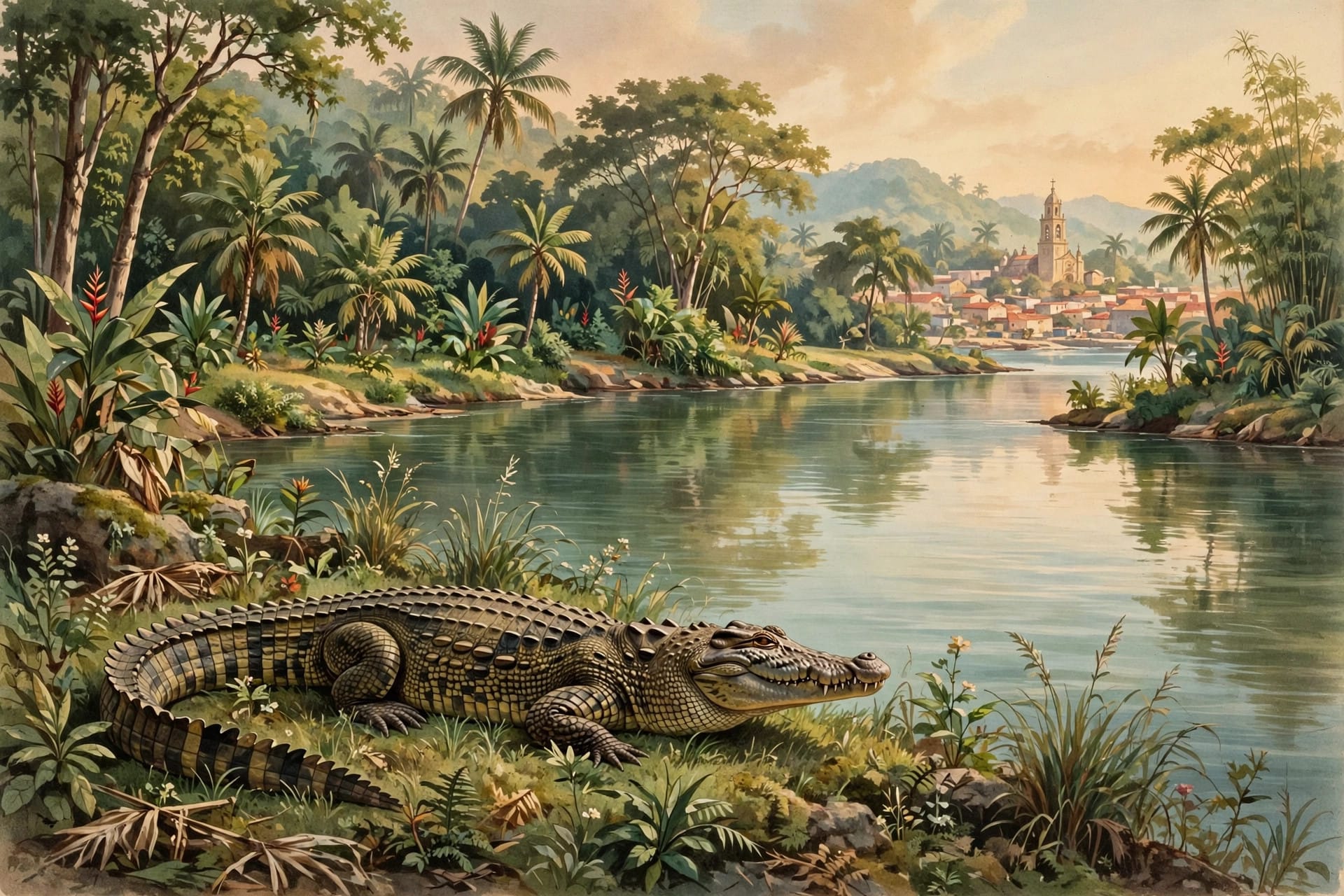
For months, one of the most talked-about residents of downtown Puerto Vallarta was not a person. A crocodile measuring about 3.5 metres, according to local reports, had taken up residence in the Cuale River, and sightings of the animal had become a regular topic of conversation in the neighborhoods along its banks.
That changed on Wednesday afternoon. After what local news reports describe as a patient and discreet follow-up lasting several months, environmental authorities and rescue teams captured the crocodile near the river’s mouth and removed it from the urban stretch of the Cuale. No injuries were reported.
Months of quiet monitoring
The capture was not a sudden reaction to a single sighting. Reports from Reporte Diario Vallarta and NoticiasPV say the animal had been watched for months while it lived in the river, and that the operation was kept low-key to avoid interference. The maneuvers came together at around 5:00 p.m. on Wednesday, November 4.
It is easy to understand why the animal drew so much attention. The Cuale runs through the middle of the city, with homes, restaurants, and the island park of Isla del Río Cuale along its course. A very large crocodile in that setting was always going to become a local celebrity, and photos of it circulated widely in Puerto Vallarta’s community groups.
A short trip to a bigger river
After its capture, the crocodile was evaluated and then transferred to the Ameca River, the larger river that forms the northern edge of the bay, where it was released in a natural habitat area away from the city. Local reports say the transfer followed the usual safety and handling protocols, for the protection of both the animal and the personnel involved.
Relocation, rather than removal, is the standard outcome in cases like this. Crocodiles are a native part of the region’s rivers and estuaries, and the Ameca offers the same kind of habitat with far less daily contact with people.
What it means for river walks
For visitors and residents, the practical picture changes very little, and that is worth saying plainly. The Cuale’s bridges, the island’s gardens and market stalls, and the riverside restaurants remain exactly what they were: some of the most pleasant walking territory in the city. I wrote about several of those corners in our guide to local secrets: hidden gems you need to visit in Puerto Vallarta, and all of them are enjoyed from paths and bridges, not from the water.
The ordinary cautions still apply, this week as every week. Enjoy the river from the banks and bridges, keep dogs out of the water along the river’s edge, and never approach or feed a wild animal. Sightings are not limited to the Cuale: on November 1, guests at a hotel in the north hotel zone reported a large crocodile swimming just offshore, a reminder that these animals move through the bay’s waters as well as its rivers.
What this does and does not change
One relocation does not empty Puerto Vallarta’s rivers of crocodiles, and no report claims otherwise. What it does is move one unusually large, unusually visible animal out of the most heavily walked corridor in the city, after months of monitoring rather than a moment of panic. That is a reasonable outcome for the neighborhood and for the crocodile.
Those of us based up in Amapas watched the story the way most locals did, through photos and group posts. The wildlife at eye level up here is mostly of the feathered kind, which is one reason the hillside’s puerto vallarta condo rentals suit travelers who like their nature scenic rather than scaly. If you are comparing places to stay for an upcoming trip, our overview of condo and apartment rentals puerto vallarta is a good place to start.
Related resources
For more local context, read about Puerto Vallarta’s No. 2 finish in the Condé Nast Traveler readers’ poll, another recent reminder that this city keeps finding its way into the spotlight, one way or another.
For new photos and local updates, follow us on Facebook. The Cuale’s most famous resident may have a new address, but Puerto Vallarta will not stay quiet for long. It never does.
About the Author