I have worked remotely from Puerto Vallarta for years, and I have learned that sharing a condo with your partner takes a little planning.
Amapas makes that planning easier. The hillside neighborhood feels calm and residential, but Old Town and Zona Romantica are only a short walk downhill. For us, it is the best place to rent when we want productive workdays and relaxed evenings in the same trip.
The key is to agree on video-call rules before the first laptop opens.
Why Amapas Works Well for Remote-Working Couples
Amapas gives us something that is hard to find in a busy vacation area: breathing room.
The streets are quieter than the busiest parts of Old Town, and many condos have large windows, comfortable living areas, air conditioning, and views of green hills or the bay. That makes it easier to focus without feeling cut off from Puerto Vallarta.
Old Town and Zona Romantica are the same area, so staying in Amapas still puts restaurants, cafés, shops, and the beach close to us. We can work through the morning, walk downhill for lunch, and return to a peaceful condo when we need to finish a few tasks.
The location also feels practical. The walk down is manageable, while a taxi or rideshare makes the trip back up simple when we are carrying groceries or coming home after a long day.

Choose Two Work Zones Before You Arrive
The biggest mistake couples make is assuming they can both work comfortably at one small table.
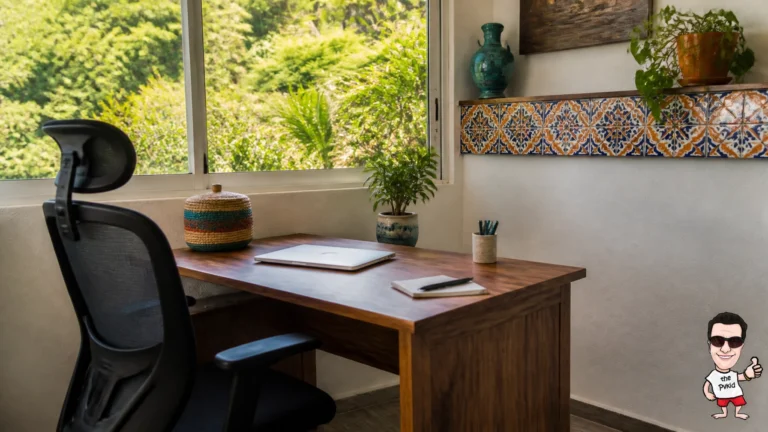
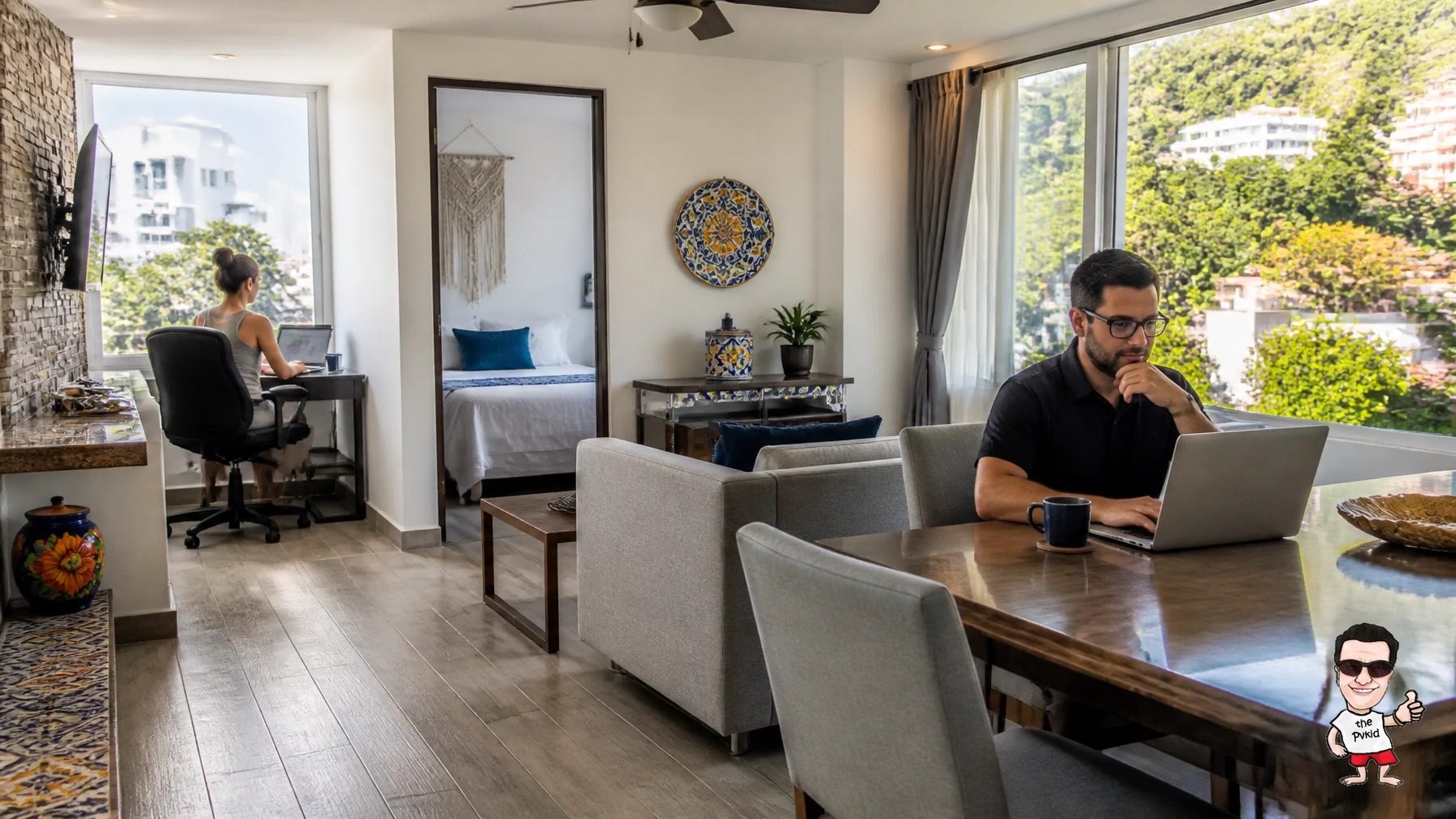
That may work for email, but it becomes difficult when both people have meetings, presentations, or calls at the same time. Before booking, we look for a condo with at least two possible work zones.
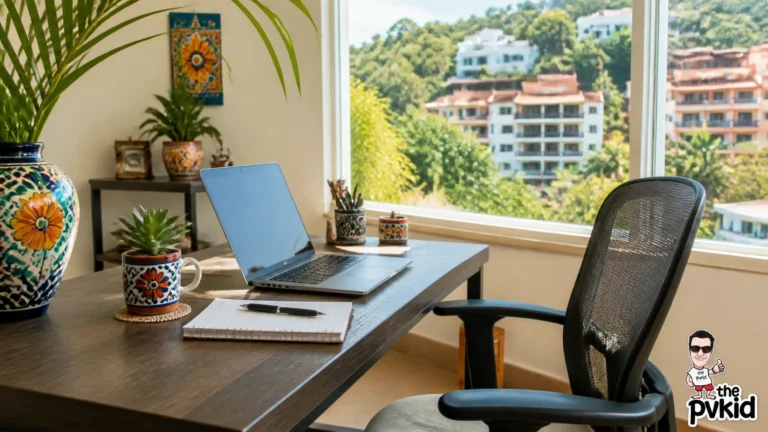
One person might use a desk in the bedroom or living room. The other can work at the dining table or kitchen counter. The important thing is to create distance between the microphones and screens.
A separate bedroom is especially useful because it gives one person a room with a door. Even a small one-bedroom condo can work well if the layout allows one person to take calls in the bedroom while the other handles quieter tasks in the main living space.
We also check the photographs carefully. Is there a proper chair? Is there enough table space for a laptop and notebook? Can the curtains reduce glare? Are there outlets near both work areas?
These details matter much more than a beautiful view when a team meeting starts.
Set Quiet Hours That Work for Both of You
Quiet hours do not have to cover the entire workday.
We find it works better to create short, predictable blocks when both people agree to keep noise low. For example, we might set a quiet period from 8:00 to 11:00 in the morning, then another block from 3:00 to 5:00 in the afternoon.
During those hours, we avoid vacuuming, playing music, running the blender, or having conversations in the same room as a call.
A shared calendar is the easiest solution. We mark important meetings with a simple symbol or color and write “quiet needed” beside them. This removes the guesswork and prevents the awkward question, “Are you on a call right now?”
A small note on the refrigerator works too. The system does not need to be fancy. It only needs to be visible.
We also recommend identifying which meetings truly require silence. A casual internal check-in may be fine with headphones, while a client presentation may require a closed door and complete quiet.
Create a Simple Call Protocol
Our call protocol is short:
- Put important calls on the shared calendar.
- Use headphones for every meeting when possible.
- Close the windows and balcony doors during formal calls.
- Let your partner know when a meeting may run long.
- Use the quietest room for presentations or interviews.
- Take a short break between overlapping meetings.
Headphones help, but they do not solve everything. A partner moving dishes, opening cabinets, or speaking nearby can still affect concentration.
For better sound, we sit with our backs toward a wall instead of facing the open living area. This reduces visual distractions and gives the camera a cleaner background. We also avoid taking calls directly beside the kitchen appliances.
If the condo has a fan, air conditioner, or ceiling fan, we test the sound before an important meeting. Sometimes a low, steady background noise is easier to manage than sudden sounds from outside.

Test the Wi-Fi at Your Actual Workstation
A strong internet plan is important, but the location of the router and the shape of the condo can affect your connection.
When we arrive, we test the Wi-Fi from both work areas. We do not only stand next to the router and assume everything is fine. We open a video-call app, turn on the camera, and speak for a few minutes from each seat.
Casa Vizcarra 1, for example, shows a real speed-test result and lists high-speed Wi-Fi with an Ethernet port. That kind of specific information is much more useful than a listing that only says “internet included.”
We also run a speed test during the hours when we expect to work. A connection that feels fast in the middle of the afternoon may behave differently when more people in the building are online.
For important workdays, we keep a phone hotspot or local eSIM ready. A power bank is helpful too, especially during heavy rain when brief power interruptions can happen.
We are grateful when hosts provide clear instructions, responsive support, and realistic information about the internet. Good communication before arrival saves a lot of stress later.
Decide Who Takes the Condo and Who Steps Out
Some days, both people need to work from the condo. Other days, it is easier for one person to take a call elsewhere.
Amapas is close to cafés and coworking options in Old Town and Zona Romantica, so we use that flexibility when our calendars become crowded. If one person has several back-to-back calls, the other can take a laptop downhill for a work block.
We do not treat this as a punishment or an inconvenience. It can actually make the day smoother. The person who leaves gets a change of scenery, while the person who stays has the quiet condo.
We rotate this responsibility so the same person is not always giving up the more comfortable workspace.
For a solo traveller, this kind of backup plan is useful too. A condo may be your main office, but knowing where you can take one urgent call gives you peace of mind.
Keep the Kitchen and Living Room Quiet During Calls
Open-plan condos are comfortable, but sound travels easily through them.
We prepare coffee and breakfast before the first call block whenever possible. If one of us is meeting with a client, the other avoids using the blender, opening noisy packaging, or washing dishes nearby.
We also keep notification sounds low on phones and laptops. A series of message alerts can be surprisingly distracting during a meeting.
The kitchen itself can be a good secondary work zone when it has a broad counter, a supportive chair, and enough daylight. But it should not be used for formal calls if the other person needs to cook or prepare food.
We find that a little preparation makes shared space feel generous rather than cramped.

Protect Your Time as a Couple
Remote work can quietly take over a vacation.
After a call ends, it is tempting to keep checking messages from the sofa or answer one more email at the dining table. We try to set a clear end-of-work signal, such as closing both laptops and putting them away.
Then we leave the condo for a walk, coffee, dinner, or time near the water.
Amapas is perfect for this routine because we can move from work to local life without a long journey. The hillside streets, colorful architecture, and tropical greenery make even a short walk feel like part of the trip.
We also avoid discussing work during every meal. A shared vacation should not become two people sitting beside each other while staying mentally connected to separate offices.
What to Ask Before Booking an Amapas Condo
Before confirming a rental, we ask:
- Is the Wi-Fi suitable for two simultaneous video calls?
- Is there a recent speed test?
- Are there two separate work areas?
- Is one workspace located behind a door?
- Does the condo have reliable air conditioning?
- Are there nearby construction or traffic concerns?
- Can the host explain the backup plan for internet or power interruptions?
- Is the building quiet during the hours we normally work?
- Are there enough outlets near both workstations?
- Is the walk back up the hill practical for us?
The answers help us choose a space that fits our actual routine instead of choosing based only on photographs.
Sueño and The Nest are examples of the type of condo setup we like to review: modern interiors, practical layouts, and a comfortable base for spending time in Amapas.
Our Final Recommendation
Sharing a condo while working remotely takes communication, but it does not have to reduce the enjoyment of your vacation.
Set up two work zones, schedule shared quiet hours, test the Wi-Fi from both seats, and agree on what happens when two important calls overlap. These small habits make a huge difference.
For us, Amapas remains the best place to rent in Puerto Vallarta. It offers a calm home base, easy access to Old Town and Zona Romantica, attractive modern condos, and enough flexibility for couples with different work schedules.
We highly recommend Amapas for couples who want to stay connected, protect their quiet time, and still enjoy the city together.
Related Resources
- Our guide to staying productive in Amapas
- Why Amapas works so well for remote stays
- condos for rent in puerto vallarta
- Puerto Vallarta condos for rent by owner
- Follow along with us on Facebook
About the Author